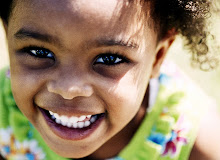
Wednesday, July 30, 2008

Education -"The Biggest Issue"

In his most recent column, David Brooks from the New York Times outlines the biggest issue facing Americans this election season. No, it is not gas prices, foreclosures or even the war in Iraq. The biggest issue is what he calls the "skills slowdown", that most of the growth in the US has been the result of an investment in human capital through education. But since 1970, the United States has been loosing it's competitive edge when it comes to educating it's citizens.

Indeed, Growth and Justice predicts that Minnesota will soon not have enough college graduates to meet the economic demand and stay competitive. This is a problem not just for the under-educated individuals stuck in low-wage jobs, but for all of us. We will all be affected when there are not enough doctors, teachers or other professionals to go around.

Of course, all this starts with investing in early childhood. As Brooks writes,
...big gaps in educational attainment are present at age 5. Some children are bathed in an atmosphere that promotes human capital development and, increasingly, more are not. By 5, it is possible to predict, with depressing accuracy, who will complete high school and college and who won't.

That is why Ready 4 K is working to promote investments in early childhood care and education. We need to let our elected officials know that this continued under-funding is not acceptable. Will you join us in making early childhood a top priority?

Thursday, July 24, 2008

How you can participate in the election process now!


The election season is starting to heat up. All candidates have filed for office and are ramping up their efforts to get out into their communities. Ready 4 K is planning several summer election activities including candidate forums, informal “candidate coffees”, and distributing early education information materials to candidates and voters.

To help you raise early childhood issues in your local elections, Ready 4 K has developed sample questions for candidates. Keep these questions close to you. When you see your candidates at public events or at your door, be sure to ask:

  • What is your plan to increase the number of Minnesota children who enter kindergarten fully prepared for learning success?
  • How will you help parents afford and access high quality early learning experiences for their children?
  • What will you do to increase the quality of early care and education programs?
  • How will you support parents in their role as their child’s first and most important teacher?
  • What will you do to support the professionals who educate our youngest citizens?

In addition to plugging into Ready 4 K’s election activities, here are some more things you can do between now and Election Day on November 4th:

  • Send a postcard to candidates in your district with a message about making early care and education for young children a top priority
  • Attend a candidate forum in your community and ask candidates about early care and education issues (use the sample questions above)
  • Talk with candidates at community events about the need to invest in early care and education (again, use the sample questions)
  • Volunteer for or donate to the candidate of your choice, and let them know you care about early care and education. (Spending a couple hours door-knocking with a candidate is a great way to bend their ear on early childhood issues.)
  • Vote in the primary election on September 9th for candidates who support investments in quality early learning
  • Vote in the general election on November 4th for candidates who support investments in quality early learning
Contact Kat at Ready 4 K if you have any questions or would like to get involved!

photo by rollerboogie

Tuesday, July 8, 2008

New Pre-K bill moving forward


Keeping our eye on federal issues, a bill sponsored by Rep. Hirono (D-HI) is making it's way through Congress. The Providing Resources Early for Kids (PRE-K) Act of 2008 would provide $500 million a year for a grant program to states, tribes, and tribal organizations for improving state-funded pre-k programming.

States must provide a portion of matching funds and set aside 10% for children birth to age 3. The federal resources cannot replace any current funding for pre-k programming. The resources are to first be used to improve the quality of programs, providing such things as increasing the number of teachers with BA degrees in early childhood, improve child-teacher ratios, and increase the hours or days of classroom time.

The bill was approved two weeks ago by the House Committee on Education and Labor.

Our friends at NWLC have a nice summary.

In Minnesota, we do not have a state funded pre-k program. Three and four year olds may participate in School Readiness programs through the public schools. But these programs do not have the resources to meet standards such as the number of hours per week and weeks per year that most other pre-k programs have. According to Dr Arthur Reynolds form the U of MN, currently about 2% of Minnesota 4 year olds participate in School Readiness programs through their school districts.

A growing number of states are implementing pre-k programs and no two are exactly alike. See our chart of state pre-k programs. There are some ideas floating around the Minnesota legislature to implement a similar voluntary program in Minnesota. Stay in touch with Ready 4 K over the coming months and let us know what you think. How would a voluntary pre-k program best fit in Minnesota?

photo by Dazed81

Wednesday, July 2, 2008

Presidential Views on ECE

As Independence Day rolls closer, I'm naturally inclined to pay more attention to national politics--as if the presidential race this year won't draw millions of new people into the process anyway. It’s an exciting year to be paying attention too, as Sen. Barack Obama-D and Sen. John McCain-R offer stark differences for voters in their style, policy positions and backgrounds.
Of course, Ready 4 K is interested in what the senators have to say about early childhood issues. Let’s take a look at some snippets from their websites to see how they fare:

Obama outlines his plan for early childhood here, and offered some suggestions in a speech last fall. Obama’s website gives more details as well:

Expand Early Childhood Education: Research shows that half of low-income children start school up to two years behind their peers in preschool skills and that these early achievement gaps continue throughout elementary school. Obama has been a champion of early childhood education since his years in the Illinois legislature….Read more here.

Support Parents with Young Children: Barack Obama would expand programs like the successful Nurse-Family Partnership to all low-income, first-time mothers….Read more here.

Expand the Child and Dependent Care Tax Credit: Barack Obama will reform the Child and Dependent Care Tax Credit by making it refundable and allowing low-income families to receive up to a 50 percent credit for their child care expenses….Read more here.

McCain, on the other hand, sticks to broad generalities in most instances on his website. In the education section of his site, he focuses on the role of parents to choose their chidren's schools:

Public education should be defined as one in which our public support for a child's education follows that child into the school the parent chooses. The school is charged with the responsibility of educating the child, and must have the resources and management authority to deliver on that responsibility. They must also report to the parents and the public on their progress.
“Early childhood” is not mentioned on his website.

It is still early in the campaign and this is reflected not only in the candidates own words (or lack there of), but also in the fact that it’s difficult to find a good analysis and comparison of where Obama and McCain stand on the issue.

What do you think? Which candidate has the better approach to early childhood?

Friday, June 27, 2008

Looking for new ways to finance early care and education


A leader in the field, Louise Stoney from the Alliance on Early Childhood Finance has put forth a new model for thinking about state funding for early childhood programs. Stoney co-authored the paper, Smarter Reform: Moving Beyond Single Program Solutions to an Early Care and Education System and she has great ideas about how to integrate the pre-k movement with the early care and education system. Stoney's ideas have been influential for us at Ready 4 K over the past eight months or so. One key idea is creating a funding structure that integrates direct funding to programs with "portable" dollars that flow directly to families and that the dollars are tied directly to quality standards. We see this framework as a way to integrate the various ideas put forward by the Minnesota legislature. In 2007, the MN House supported investing in the current infrastructure of early learning programs and the Senate put forward creating Pre-K allowances (scholarships) for low-income families to afford high quality early learning.

The structure that Stoney proposes would create room for agreement between both the House and Senate and allow for each body to make the investments they desire.

Does this model make sense to you? What do you see as benefits or challenges with this kind of system?

Tuesday, June 24, 2008

Another way to encourage reading


As we saw in the ECIPs post on Language and Literacy development, it's important to encourage early literacy with preschool aged children. The more exposure children have to books and reading, the better.

I came across this article about using therapy dogs as reading companions. Children practice by reading aloud to the dog (under supervision of the trainer). This low-stress environment and forgiving audience as well as the physical contact with the dog help boost the child's reading confidence. The children also learn compassion and basic pet-care.

Now, it is not expected that every 3 or 4 year old be able to read aloud fluently. But just pretending to read a story aloud to another person/pet/stuffed animal is excellent early literacy practice. The more children learn to read for pleasure, the greater the likelihood that they will read above grade level and eventually become life-long readers.

What do you think?

photo by acpl

Wednesday, June 18, 2008

Link love: new parenting site

If you haven’t come across it yet, a new website for Minnesota parents launched recently: Minnmoms.com

The site is sponsored and supported by the Pioneer Press and covers topics such as time savers and discussion on topics such as child safety or how much to spend on your kids. There are also some great discussion boards and several bloggers sharing stories and insights.

Check it out and join in!