Wednesday, November 12, 2008

The challenge of assessing early learning


As news of a down-turning economy continues to fill the media, early childhood has been brought forward as a solid, long term investment. This has been a key point for Ready 4 K as we move forward in Minnesota to ensure that every child starts kindergarten, supported, encouraged and fully prepared for learning success. Ready 4 K board member Art Rolnick has gained national attention for framing increasing access to quality early care and education as an economic investment.

Like any investment, we need to be sure it is generating the returns we expect. It's a complicated question to answer. Early learning is, of course, about bright, creative and unique individual children, not stock options or 401(k)s. One tool that is used in Minnesota is the Minnesota Kindergarten Readiness Assessment. (View a previous post to learn more about the Assessment and the most recent result.)

Currently, the Assessment is done with only a representative sample of children in Minnesota. Expanding the Assessment for all children has been part of Ready 4 K's legislative agenda in recent years and is still part of a larger vision for creating an early childhood system that supports all children and families.

Minnesota 2020, a nonpartisan think tank, has recently published an article on Assessing an Early Investment. Ready 4 K President Todd Otis and Early Childhood Systems Specialist Zoe Nicholie have much to say in the article about the Assessment and how it should be used.
Creators and supporters of the assessment remain vocal that it should not be viewed as a test.

Todd Otis, President of Ready 4 K, an organization that promotes school readiness initiatives in the state, phrased it this way, "Instead of thinking of it like the SATs, think of it like a check up with your doctor."

Trained teachers observe children's behavior as they participate in regular activities, rather than administer an actual test. The assessment's purpose is to review overall progress, not create specific skill mandates that define passing or failing grades. The MDE is not saying that by the time a child enters kindergarten he/she must be able to recite the alphabet, tie his/her shoe and solve basic arithmetic problems. Instead, the assessment outlines a range of behaviors and skills that demonstrate progress in a variety of areas deemed important for later success.

...........
Otis and his colleague Zoe Nicholie of Ready 4 K warn against mutation of the assessment into a high stakes testing system. The logic of high stakes testing such as that mandated by NCLB is that schools should be held accountable for their test results, and by linking progress to funding levels schools will be more motivated to improve. One of the problems with this logic, however, is that it fails to account for the myriad of outside influences that impact young people's ability to learn and be successful. Health, parental involvement, and early education exposure are only a few of the factors that, according to Nicholie and Otis, influence a child's early development. If assessment results are directly tied to kindergarten or preschool funding, they ignore the complex web of influences shaping children's growth.
It's important that we know how are kids are doing so that we can create early learning opportunities that work best for them. It is also important for communities to understand how well their children are prepared so that the entire community can work together to ensure their success in school and in life.

What do you think? Share your thoughts on how to best determine the success of our early learning investment in the comments below.

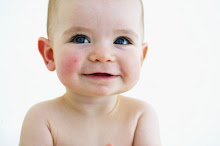
photo by FrancoisRoche

Monday, November 10, 2008

Looking for something to do?

After all the excitement around the election (and then some time to digest all the results), it's time to begin looking ahead and answering the question, "Now what can I do to support young children and their families?" One important thing you can do it be in touch with your newly elected officials.

Write a letter or make a quick phone call to congratulate them, thank them for serving their community in this way and encourage them to make early childhood a top priority. Ready 4 K has a Guide for Policy Makers that outlines why early care and education is an important investment and what Minnesota needs to do about it.

You can find out the results of your local elections by visiting the Minnesota Secretary of State website. For the new members of the Minnesota House, there is a roster of the new membership. (To write a letter to a new House member, look up their name on the roster, use the room number listed and complete the address for the State Office Building in St Paul, MN. For example, Room xxx State Office Building, St Paul, MN 55155-1298. For newly elected members without room numbers, simply send your letter to the State Office Building.)

The most effective advocates are those who develop a personal relationship with their elected officials. It's never too early or too late to start building that relationship. It's important to keep open and respectful communication with our leaders. Remember, advocacy is a marathon and not a sprint. Keep it up and over time we will continue to see policies made that benefit our youngest citizens.

Friday, October 31, 2008

It's almost time!


The big day is fast approaching. That's right... election day 2008! Over the past couple of months, we've outlined the early childhood policy positions of the presidential candidates and encouraged you to get to know your own local candidates. But soon, all the talk will be over.

First, the most important thing is to vote on November 4. If you live in Minnesota and don't know where to vote, check out the polling place finder. If you want to know who will be on your ballot, the League of Women Voters has a tool to help you find out.

If you haven't registered yet, don't worry! In Minnesota we have same-day voter registration. You just need to go to your polling place on election day and provide proof of residence. Just just need to provide one of the following as proof (from the Secretary of State website):
  • A valid Minnesota driver’s license, learner’s permit, Minnesota ID card, or receipt for any of these
  • A valid student ID card including your photo, if your college has provided a student housing list to election officials
  • A Tribal ID card that contains your picture and signature
  • A valid registration in the same precinct under a different name or address
  • A notice of late registration sent to you by your county auditor or city clerk
  • A voter registered in the same precinct as you who can confirm your address with a signed oath
  • An employee of the residential facility where you live who can confirm your address with a signed oath

Alternatively, you may provide both 1) a photo ID from the list below, and 2) a current bill with your current name and address in the precinct.

Photo IDs (may be expired) Bills (delivered electronically or by mail)
  • Minnesota Driver's License
  • Minnesota ID Card
  • United States Passport
  • United States Military ID Card
  • Tribal ID Card
  • Minnesota University, College, or Technical College ID Card


  • Utility bill due within 30 days of election day:
    • Telephone (landline, cell, VOIP, etc.)
    • TV (cable, satellite, etc.)
    • Internet services
    • Electric
    • Gas
    • Solid Waste
    • Sewer Services
    • Water
  • Rent statement dated within 30 days of election day that itemizes utilities
  • Current student fee statement
If you have problems getting to, registering or voting at the polls, call the non-partisan Election Protection Hotline at 1-866-OUR-VOTE.

Second, help us Get Out the Vote! Ready 4 K is part of the Election Day Community Coalition to do voter turn out in North Minneapolis. We will have three four-hour volunteer shifts from 8am-12pm, 12pm-4pm, and 4pm-8pm. Volunteer activities include phoning, door knocking, giving rides to the polls, and being poll watchers. No experience necessary. Contact Kat for more information.

This is such an exciting time for our community and our country. Join us in this historic occasion and VOTE!

photo by Vaguely Artistic via flickr

Friday, October 17, 2008

Early Childhood gains national attention

If you missed the final presidential debate, early childhood and education received attention in the final question. Here is the transcript of that portion of the debate.

Question: The question is this: the U.S. spends more per capita than any other country on education. Yet, by every international measurement, in math and science competence, from kindergarten through the 12th grade, we trail most of the countries of the world.

The implications of this are clearly obvious. Some even say it poses a threat to our national security.

Do you feel that way and what do you intend to do about it?


Question: Do you think the federal government should play a larger role in the schools? And I mean, more federal money?


The election is fast approaching. Check back soon for nonpartisan volunteer opportunities to Get out the Vote in Minnesota.

Thursday, October 9, 2008

A picture of quality early childhood

Around Ready 4 K, we spend a lot of time talking about quality early care and education. One of our four principles is Promote Quality (the others are Support Parents, Increase Access, and Produce Results). Sometimes it's difficult for people who do not work with young children to envision what exactly does high quality early education look like. The following video by our friends at Pre-K Now demonstrates a high quality pre-k classroom and how it benefits all the kids who participate. Join us as we work to build the foundation for our future through quality early care and education.

Wednesday, October 1, 2008

Help set the Record!


Join Ready 4 K Thursday as we help the nationwide effort to “Read for the Record.”

Read for the Record, sponsored by Jumpstart, aims to bring attention to early care and education and increase awareness of the importance of reading.

Minnesota Education Commissioner Alice Seagren and Ready 4 K Executive Director Todd Otis will read “Corduroy” to children at New Horizon Academy (401 Robert Street, St. Paul) on Thursday, October 2nd at 11:30am. “Read for the Record” will be trying to break the Guinness Book of World Records mark for the highest number of people reading the same book in a day.

"Having a regular story time with parents and children provides a fun and effective way to develop language skills in little children,” notes Otis. “Those language skills will lead to the ability to read, the single most important building block for later school success. That is why Ready 4 K supports ‘Read for the Record.’”

If you would like to join in and register your own efforts to "Read for the Record", visit www.readfortherecord.org.

Friday, September 19, 2008

Get to know your candidates

If you haven't noticed, election season is upon us. Now is a great time to engage your candidates and tell them to make early care and education a top priority. One way to get to know your candidates is to hold a candidate coffee. This informal gathering is a job interview for who you will hire to represent you. (We pay their salaries, so we're the bosses.) You can find out where the candidates stand on the issues that are important to you. It is also an excellent opportunity to educate candidates so that whoever is elected will start their job one day one knowing what is important to you.

A candidate coffee is simple. You can read our Holding a Candidate Coffee tips page in the Advocacy Resources section of our website.

Keep the group small and the setting casual. The goal is to have an open conversation, not a political speech. The group should be made up of constituents of the district. Candidates like to talk directly to the people they will be representing and it is the citizens of the district who will be making their choice.

In the last election cycle, I attended a candidate coffee in the home of one of our advocates. The advocate invited some of his neighbors who also had young children. About eight of us were there and we chatted ahead of time to figure out what questions we wanted to ask and what issues to discuss. We had treats and other refreshments to share. Candidates from both major parties were invited to come visit with the group at separate times. One candidate came first and the group talked with the him for about 45 minutes. The second candidate arrived and the group had a similar conversation with that candidate for about the same amount of time. Before each candidate left, the group provided information and materials on early care and education as well as their contact information in case the candidate had any additional questions.

The candidate coffee was interesting and informative for all who attended. We were able to hear directly from the candidates and move away from scripted speeches. The candidates were able to engage constituents and begin building relationships with early childhood advocates in their district.

View the Holding a Candidate Coffee page for more details on how the steps for setting up a candidate coffee and sample questions. If you would like to hold a candidate coffee in your Minnesota house district, contact Ready 4 K and we will work with you to set one up.